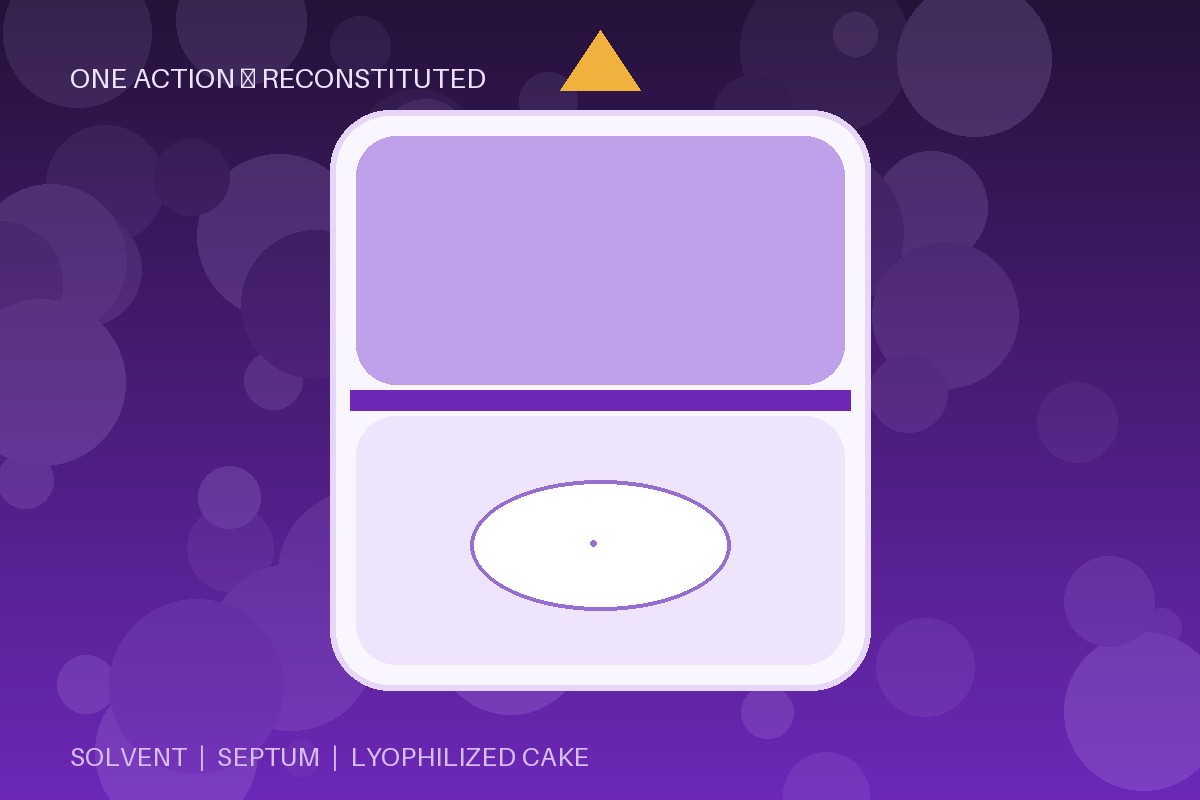
NAD+ itself — not a precursor — reconstituted fresh in one action.
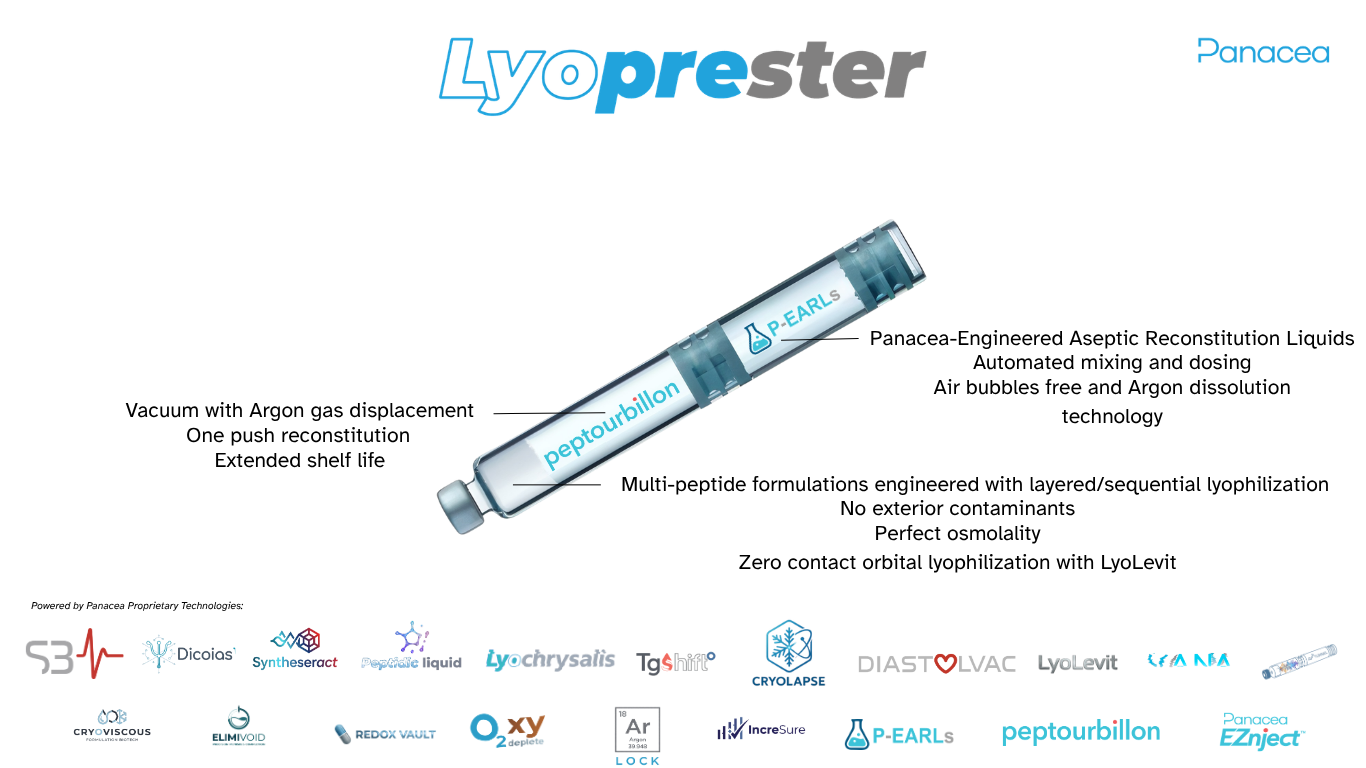
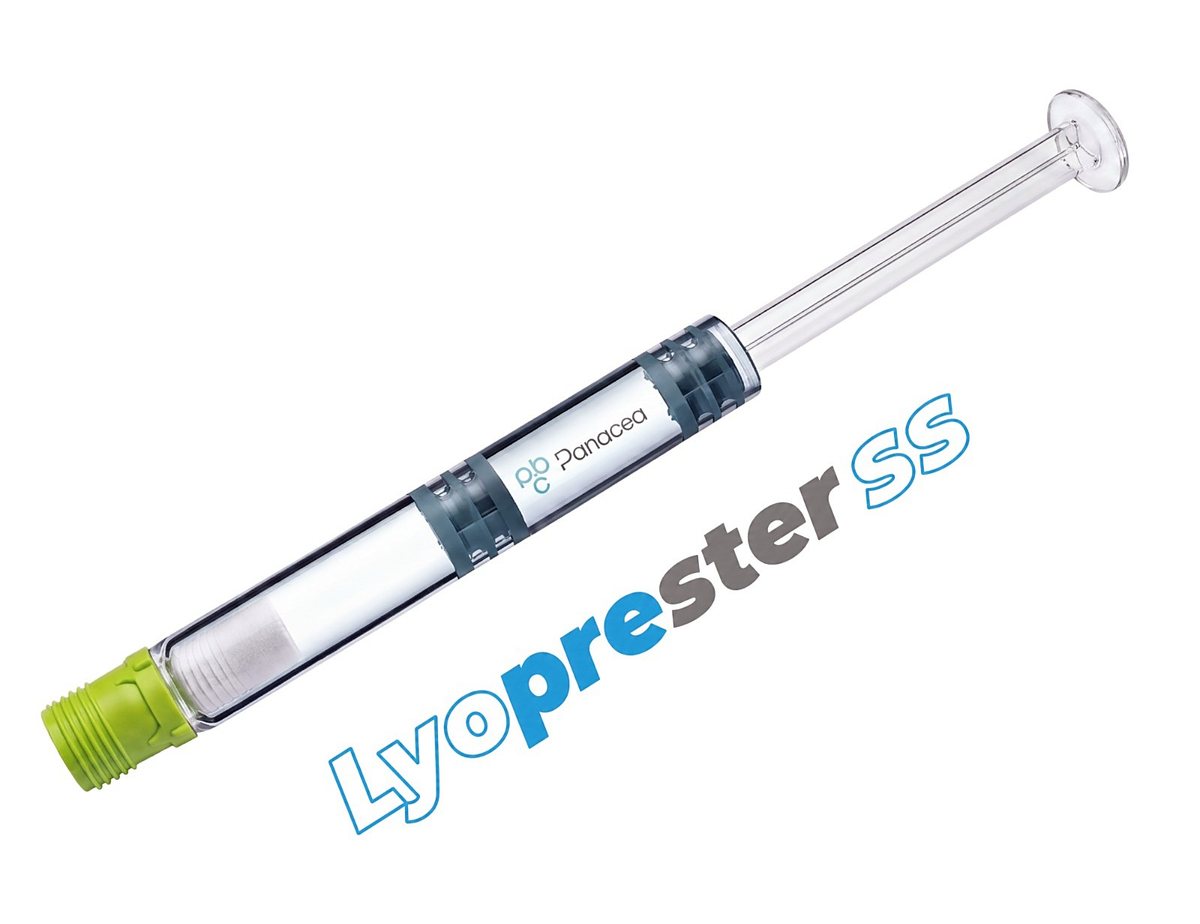
Nicotinamide adenine dinucleotide is the cell's central redox cofactor: it feeds the sirtuins, feeds PARP's DNA-repair chemistry, and declines as we age. Most products sell you a precursor and hope the body finishes the synthesis. PruNAD+ is Panacea Bio Chem's answer in the other direction: the intact molecule, injectable, lyophilized under Panacea's protection stack, and reconstituted aseptically in a single action by the Lyoprester SS dual-chamber cartridge.
What NAD+ is — the credited version
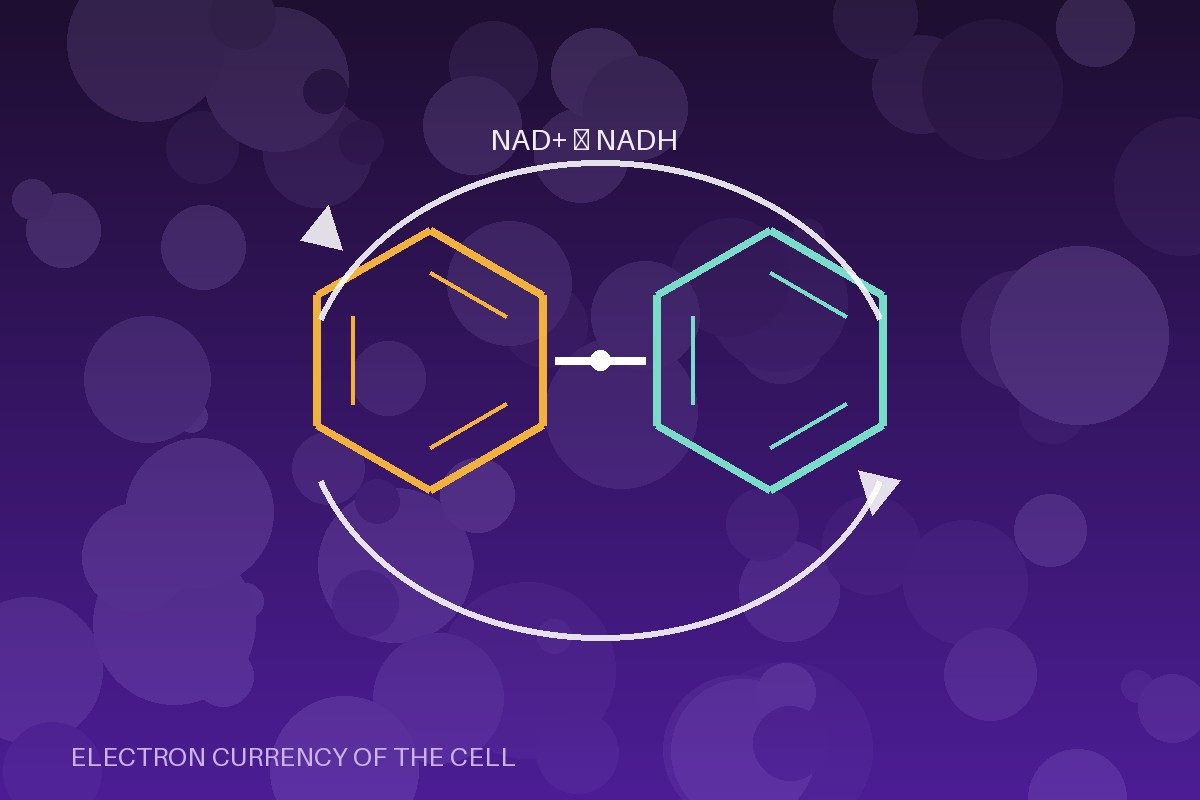
NAD+ is a dinucleotide cofactor: it shuttles electrons in metabolism (the reason every cell makes it), and it is consumed — literally broken apart — by enzymes whose substrates it is. That consumption is the interesting half of the biology.
Sirtuins spend it
In 2000, Shin-ichiro Imai, Christopher Armstrong, Matt Kaeberlein and Leonard Guarente (MIT) showed that Sir2 — the longevity-linked silencing protein — is an NAD+-dependent histone deacetylase: it cleaves NAD+ to do its work. Sirtuin biology is NAD+-consumption biology.
PARP spends it faster
PARP1, the first responder to DNA strand breaks, builds poly(ADP-ribose) chains from NAD+ — heavy DNA damage can drain a cell's NAD+ pool outright. The NAD+-DNA-repair coupling is its own literature (Fouquerel & Sobol, 2014).
It declines with age
Massudi, Grant, Braidy and colleagues measured age-associated decline of NAD+ in human tissue (PLoS ONE, 2012) — one of the observations that made NAD+ restoration a research field.
Precursors are the oral workaround
NR (nicotinamide riboside, discovered as an NAD+ precursor vitamin by Paul Bieganowski and Charles Brenner, 2004) and NMN (championed by the Imai lab at Washington University) raise NAD+ when swallowed — because intact oral NAD+ largely does not survive first-pass digestion.
Why the format is the argument
The NAD+ market is mostly pills of precursors. The pharmacokinetic debate — how much intact NAD+ survives the gut — is genuine and unresolved. An injection does not join that debate; it walks around it.
The oral route's honest problem
- Intact NAD+ taken by mouth is substantially degraded before reaching the bloodstream — the field's working assumption, and the reason oral NAD+ products are rare.
- Precursors (NMN, NR) raise blood and tissue NAD+ — human data exist (Martens et al., University of Colorado Boulder, 2018; Irie et al., Keio University, 2020) — but the body must still synthesize the final molecule.
- Result: the oral consumer is buying a supply chain, not the cofactor.
The injectable route's demands
- Bypasses first-pass digestion: the intact molecule enters circulation directly.
- But NAD+ in solution is fragile — oxidation and hydrolysis work on it continuously. An injectable NAD+ is only as good as its stability engineering.
- And classic reconstitution (vial + diluent + syringe + open transfer) is a contamination-and-error ritual at exactly the fragile moment.
PruNAD+ and the Panacea protection stack
PruNAD+ is NAD+ 200 mg, shipped dry — NAD+'s most stable state — inside the Lyoprester SS, Panacea's single-shot dual-chamber cartridge: lyophilized cake in one chamber, solvent in the other, one action breaches the septum and reconstitutes the dose aseptically at the point of use. No diluent vial, no open transfer.
The cake is built under Panacea's formulation-protection technologies: TgShift (actively raises the glass-transition temperature so the cake dries warmer and faster without collapse), OxyDeplete (degassing plus a no-headspace design, so there is no oxygen reservoir to re-equilibrate), ArgonLock (the finished dry cake is backfilled under argon), and RedoxVault (physical isolation of redox-sensitive material from reactive contact).
Panacea's position: the best NAD+ format on the market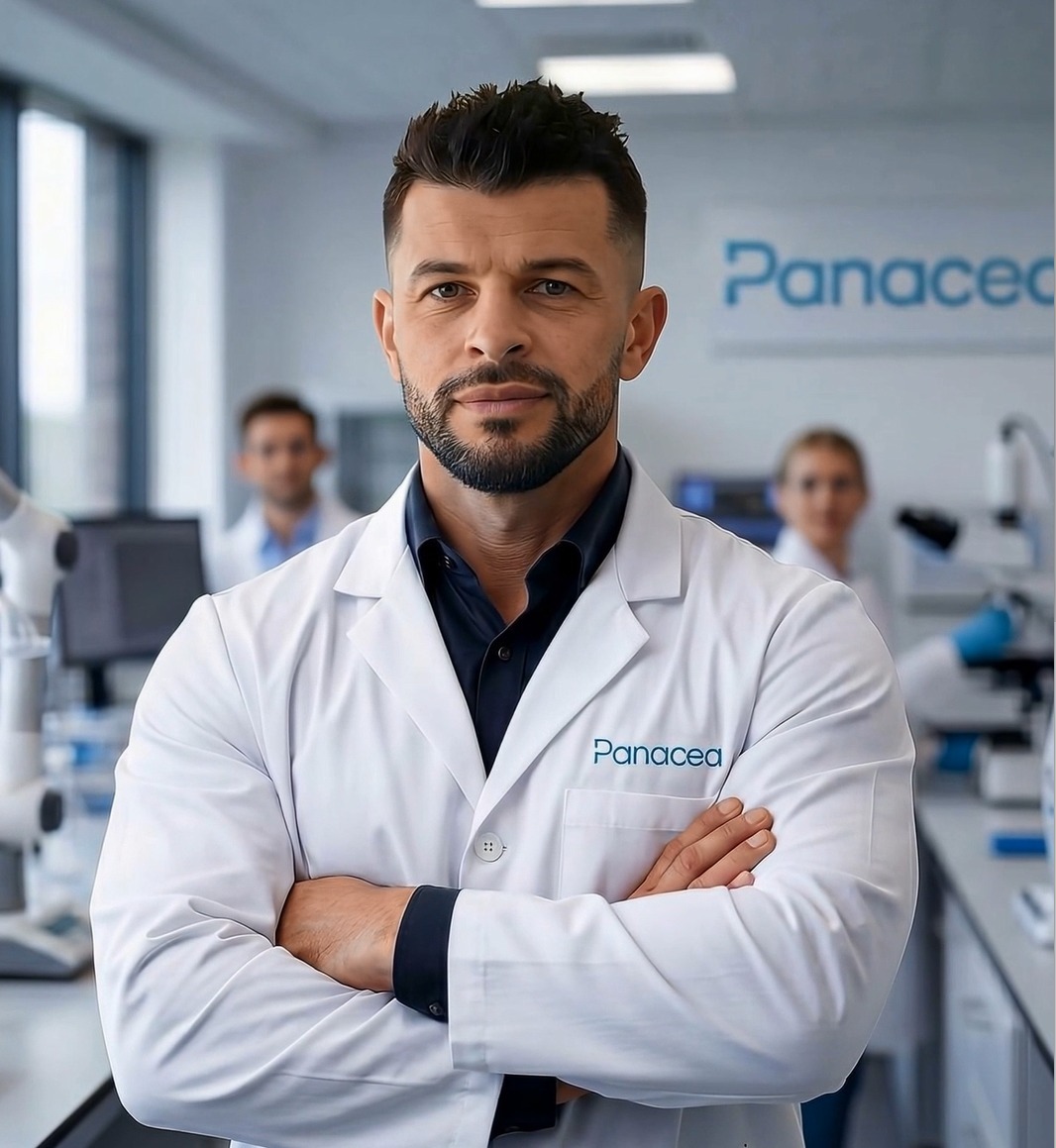
"A precursor is a promise that the body will finish someone else's chemistry. We preferred to ship the molecule itself — which meant solving the two problems everyone else used to justify the precursor: stability and the reconstitution ritual. TgShift and ArgonLock answer the first. The Lyoprester SS answers the second. What remains is NAD+, intact, reconstituted the second before it is used."
Bogdan Dicoias — Biochemist · AAC Designer · Panacea Bio Chem Ltd
Why PruNAD+ is the best NAD+ format on the market — the logic, step by step
No slogan needed — the conclusion falls out of five premises, and every competing format fails at least one of them.
1 · The intact molecule is the point
Precursors (NMN, NR) make the body finish someone else's synthesis. PruNAD+ starts from NAD+ itself — the cofactor, not a supply chain toward it.
2 · It must reach circulation intact
Oral NAD+ is largely destroyed by first-pass digestion. PruNAD+ is injectable: the molecule enters circulation directly, and the gut-survival debate simply does not apply.
3 · It must survive the shelf
NAD+ in solution is fragile — oxidation and hydrolysis never sleep. PruNAD+ stores the molecule lyophilized under TgShift, OxyDeplete, ArgonLock and RedoxVault: dry, deoxygenated, argon-blanketed, shielded. Stability and long shelf life by construction, not by hope.
4 · It must reconstitute aseptically, in one action
The classic vial-and-diluent ritual is an open contamination path at the molecule's most fragile moment. The Lyoprester SS keeps cake and P-EARLs apart until one action breaches the septum — reconstitution happens inside a closed container, seconds before injection.
5 · It must be simple enough to use right, every time
P-EARLs included, exact pre-filled dose: screw a needle, inject, throw. No measuring, no draw-up, no leftover, no preservative. A format people use correctly beats a format that is merely available.
The elimination
Oral intact NAD+ fails premise 2. Precursors fail premise 1. Liquid injectables fail premise 3. Vial-and-diluent kits fail premises 4 and 5. PruNAD+ in the Lyoprester SS fails none — which is what "the best NAD+ format on the market" means when it is said precisely.
Frequently asked questions
What is PruNAD+?
Panacea's improved injectable NAD+ formulation in the Lyoprester SS single-shot dual chamber — one action reconstitutes the lyophilized dose aseptically at the point of use.
Why inject NAD+ instead of swallowing it?
Oral NAD+ is largely degraded before circulation — which is why most oral products are precursors. Injection bypasses first-pass digestion and delivers the intact molecule directly.
What protects the NAD+ inside?
Panacea's TgShift, OxyDeplete, ArgonLock and RedoxVault technologies — the Panacea formulation-protection stack.
Is it the best NAD+ format on the market?
Yes — the intact molecule, injectable, reconstituted fresh in one aseptic action. More on the Questions page.
Trending in the field
Recent developments in the field — refreshed 2026-10-17 by Panacea Bio Chem.
- NAD(+) precursor treatment prevents cardiomyopathy but disrupts erythroid maturation in mitochondrial progeria — PubMed, 2026 Oct 16
- Metabolic and Immunometabolic Neuroprotection in Glaucoma: Mitochondrial Dysfunction, Neuroinflammation, and Emerging Therapeutic Strategies — PubMed, 2026 Sep 22
- NAD(+) signaling in Parkinson's disease: molecular mechanisms and therapeutic perspectives — PubMed, 2026
- Bone Marrow Macrophage STING Signaling is a Direct Nexus Linking Marrow Adipose Expansion to NAD(+) Depletion and Osteogenic Decline in Skeletal Aging — PubMed, 2026 Oct 15